
Story | Leslie Yip
Collagen is the most abundant protein in the human body, making up 30 per cent of the body’s protein. From forming organs and ensuring their function to shaping the skin, it plays a pivotal role in maintaining a healthy body. Think of it as the “glue” that holds all these things together. In fact, the word collagen comes from the Greek word “kólla,” which means glue.
Lately, there has been a surge of oral collagen supplements promising more beautiful skin, hair and nails. If you are interested in adding these to your beauty routine but don’t know where to start, you are not alone.
We talked to Libby Matthews (LM), founder of Dose & Co., which recently launched in Canada, as well as Jean-Yves Leroux (JL), president and co-CEO of Madelys.
(The information contained in the following interviews is provided for general information purposes only and must not be construed as medical advice or any other form of professional advice or care.)

This sparkling water offers five grams of hydrolyzed marine collagen, plus 36 mg of organic inner-leaf aloe vera powder.
GLDN HOUR Peach Ginger Collagen Sparkling Water, 355 ml | $4.50
eG: What are the different types of collagen? Do we need different typesfor beauty and joint issues?
LM: There are 16 types of collagen. Types 1, 2, and 3 are the most prevalent in our body, making up about 80-90 per cent of our total collagen.
Type 1 collagen is usually considered best for the skin. It is the most abundant type of collagen in the body. It maintains healthy bones, skin, hair and nails. Type 2 collagen is the main component of the cartilage and supports a healthy skeletal system, including joint health. Type 3 collagen is found in skin, muscles, blood vessels and intestines.
JL: When it comes to the nutritional intake of collagen supplements, the specific type isn’t relevant. Rather, it’s the fact that these collagens (Types 1-3, mainly) must be “cut” into short peptides via a process called hydrolysis, where collagen is broken down into smaller, easy-to-process particles. Short peptides can then enter the body and stimulate different tissue cells to absorb peptides and amino acids—and, consequently, generate the right type of collagen(s).

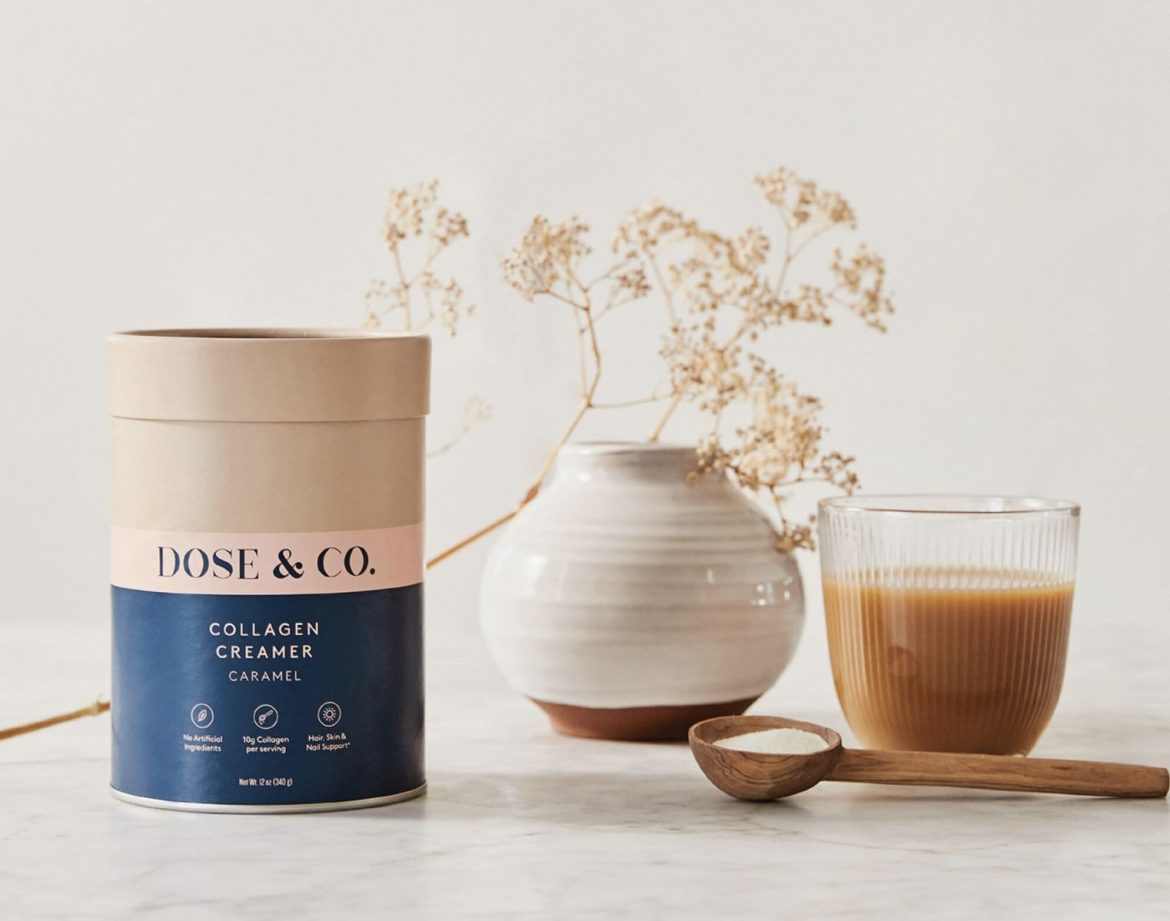
Keto-friendly and suitable for those who are lactose intolerant, this non-dairy creamer is rich in bovine collagen and good fats from coconut milk. Each serving offers 10 grams of bovine collagen, and it can be blended into coffee, smoothies, milk and recipes. Dairy options and non-flavoured options are also available.
Dose & Co. Dairy-free Collagen Creamer in Vanilla, 340 g | $34.99
eG: Vitamin C is said to be effective in collagen treatments. Do you recommend oral or topical use of vitamin C to reap maximum benefits?
JL: Vitamin C is needed for the synthesis and maintenance of collagen. It helps to produce collagen, as it has an active role in collagen synthesis. It also acts as a sort of glue that binds collagen fibres together. I do recommend eating foods that are rich in vitamin C or taking a vitamin C supplement to help with optimal absorption.
LM: Indeed! Vitamin C is essential to the body’s ability to create new collagen proteins. You need to ingest it to allow effective action throughout the body. However, topical application does show a more direct effect on the skin tissue.

This formula incorporates vitamins C and D to help maintain healthy skin, cartilage, bones and tissues made of endogenous collagen. It can be mixed into water or juice and taken once or twice daily on an empty stomach.
Medely’s Nutra Collagen Plus, 250 ml | $29
eG: Will taking an oral collagen supplement increase the effectiveness of topical products?
LM: Collagen supplements are consumed orally and support your body from the inside out. The structure of collagen found in collagen supplements is different than the collagen found in topical creams.
JL: Combining digestive and topical collagen intake will definitively have a better impact on the skin and support a sustained biological effect. For cosmetic uses only, topical application might be sufficient but, for deep and long-term results, the combination of digestive and topical use is indeed most synergistic.

Formulated with essential amino acids and gently flavoured naturally with essences of passionfruit, it can be enjoyed in water, tea, smoothies or paired with other supplements. Other flavours are also available. Made in Canada.
AURA Inner Beauty Marine Collagen (35-day supply), 350 ml | $68
eG: How long does it take to see the effect of collagen supplements?
LM: Collagen takes at least 2-4 weeks to start working. To see visible results, you usually need to wait at least four weeks and consume it daily.

This collagen, derived from grass-fed cows,does not contain antibiotics, hormones, artificial sweeteners or GMOs.
Good Goddess Powerful Essential Grass-Fed Collagen, 250g | $52
eG: Can you, in fact, take too much collagen?
JL: Except for some rare genetic diseases, where a person will biosynthesize an excess of collagen fibrils in their body, people generally won’t experience side-effects from ingesting too much collagen. In cases where one would ingest large amounts of supplemental collagen, the body will absorb what it requires, and the rest will be eliminated through urine. It’s also important not to use collagen as a sole protein source. We suggest not exceeding 15-20 per cent of collagen in your daily overall protein intake.
