
Story | Iris Yim Photography | Iris Yim, Zermatt Tourism, CERVO Mt. Resort
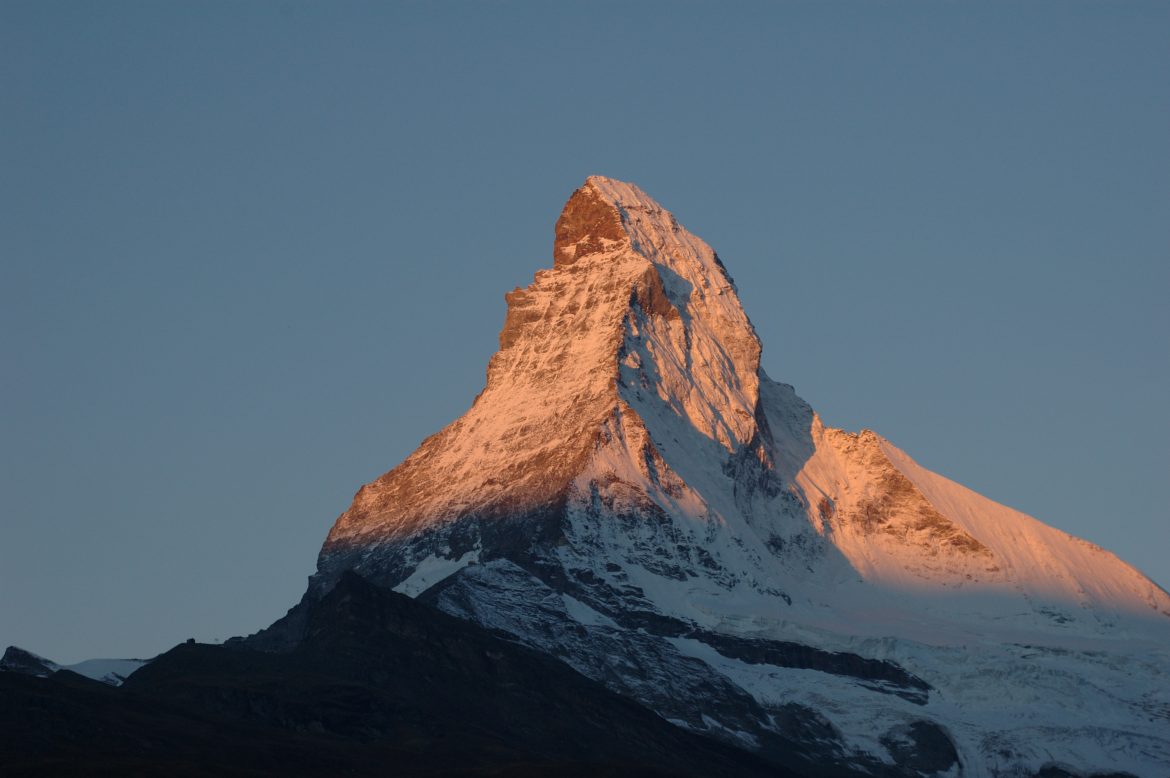
The Matterhorn soars 4,478 metres above sea level in the southwest of Switzerland, near the border with Italy.
While it is but one of 128 peaks exceeding 4,000 metres in the Alps, the Matterhorn stands out with its cragged rock “tooth”. The pyramid-like face visible from the Swiss town of Zermatt is yet the most imposing.

The reflection off the idyllic Stellisee mountain lake. (Photo by Michael Portmann)
In autumn and winter, the white snow covering the Matterhorn softens the hard edges of the triangular peak, giving it a more majestic appeal. In summer, the melted snow once again reveals the ruggedness that has weathered eons of harsh winters.
One can’t help but hold in awe the sights of the forbidding rock formation that the more adventurous are eager to conquer. Since the early attempts to scale the peak in 1865, the Matterhorn attracts an endless stream of climbers every year.

First snow at Zermatt. (Photo by Leander Wenger).
Some visitors are satisfied with a distant view and are rewarded with different angles of its magnificence. But for those interested in a closer view, there is the Matterhorn Express and the latest 3S cable car Matterhorn Glacier Ride that carries visitors to Europe’s highest mountain station on the 3,883 metre Klein Matterhorn.

The big cross erected on Matterhorn Glacier Paradise.
.From the vantage point of the Matterhorn Glacier Paradise observation deck, visitors get 360-degree views of the regal peak and the breathtaking glacial landscape. Here, they can also enrich their experience at The Glacier Palace, a series of ice-sculpture exhibitions and year-round snow experiences.

An expansive view of the glacier.
Another way to tour the peak is aboard the cogwheel train of the Gornergrat Railway, which takes visitors to various attractions along Gornergrat, with the Matterhorn and other peaks as the backdrop. The cogwheel train is an example of human ingenuity, displayed in the engineering feat of building railways, tunnels and overhead bridges at very steep angles across challenging terrain.

Travelling uphill on a cogwheel train to visit the attractions of Gornergrat.
In summer, visitors are greeted by herds of adorable Valais Blacknose sheep grazing from Riffelalp to Gornergrat. These fluff balls love to hang around under the shade of the station on hot summer days. The herd leader has a GPS neck ring so that the shepherdess can post a daily location update of the herd online at zermtt.ch/en/media/news/activities/meet-the-sheep-on-the-gornergrat2.

A joyful encounter with the black-nosed sheep.
Hikers can walk from Gornergrat to Riffelsee, or take the five-lake hike from Sunnegga to Fluhalp. The mesmerizing reflection of the Matterhorn on the lakes will make every step worthwhile. The set-off point for any of these treks is Zermatt, making the little town an essential stop for an encounter with the Matterhorn.

Climbers conquering the Matterhorn. (Photo by Marc Weiler).
Originally a rustic hideaway village in a Swiss valley, Zermatt has become a buzzing tourist hotspot. The car-free town only allows bicycles, eBuses and eTaxis. With a large number of tourists descending upon the small town every season, the main street, Bahnhofstrasse, which leads to the main station, is lined with shops selling souvenirs, watches and luxury fashion. Adding to the town’s appeal is the fact it has retained its original chalets and timber houses.

Climbers conquering the Matterhorn. (Photo by Marc Weiler).
The town is packed with more than 100 hotels, thousands of vacation apartments and hundreds of restaurants. They are housed in restored centuries-old buildings, with heavy slate roofs and Zermatt’s abundant larch trees for timber. Larch is a hardwood with a high resin content, making it pest-resistant. As the timber ages, it takes on a dark tint.

Participants in traditional costumes carrying cow bells take part in Zermatt’s annual Folklore Festival.
The old timber and the rock slates work together to give the local structures superior capability in absorbing and retaining heat to help weather the cold winters.

Madre Nostra serves Italian cuisine.
In summer, most of the buildings in town have brilliant flowering potted plants hanging by the windows, which stand out against the dark timber exterior. With the coming of the first snow, the contrast between the dark houses and the white snow is a photographer’s dream.

Pleasant al fresco dining.
Yet, the centrepiece of it all remains the Matterhorn.
Where to Stay
In addition to its restored century-old main residence, Cervo Mountain Resort features 54 different accommodations, ranging from standalone villas where guests can even have a personal chef, to suites and serviced apartments.
Cervo Mountain Resort.
Complete with a spa, rock-climbing room, wine cellar and a quiet room, the resort also offers a variety of dining options, including the unique Bazaar, inspired by oriental markets and serving vegetarian dishes from Middle Eastern and Asian cuisines. Or, you might enjoy the relaxed ambience of Madre Nostra and its Italian fare.

Guest rooms at the Cervo Mountain Resort.
This five-star resort stands out by blending in with nature to create a rustic ambience with quality furnishings. With sustainable use of water and electricity, plus other eco-friendly measures, it has received the ibex fairstay Gold sustainability mark.

Cervo Mountain Resort’s main restaurant, Bazaar.
It is also rated in the Sustainable Living category by hotelleriesuisse and is a founding member of Responsible Hotels of Switzerland. It won the annual MyClimate award as a pioneer in the sustainable hotel industry, and part of its revenue is directed to international climate protection projects managed by the Myclimate foundation.
Cervo Mountain Resort
Riedweg 156, CH-3920 Zermatt
+41 27 968 12 12
cervo.swiss
