
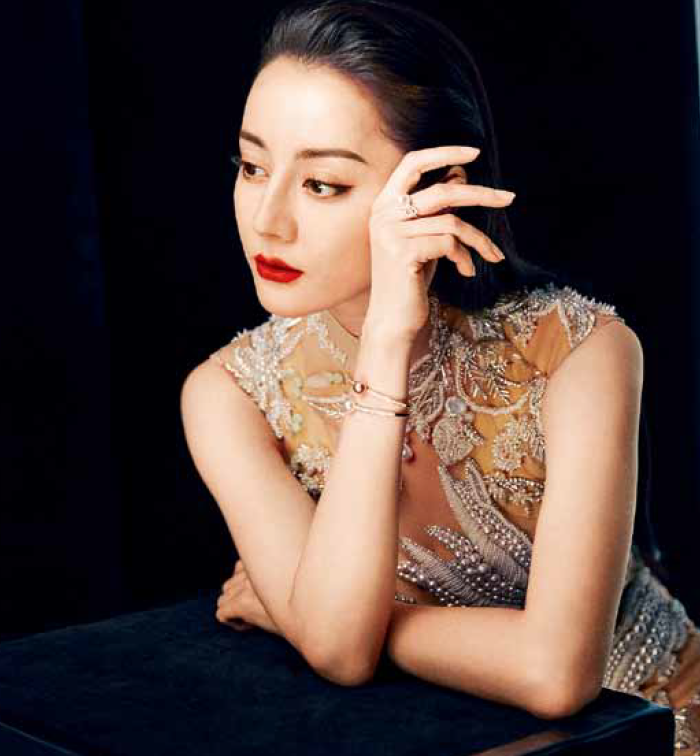
Story | Eve Lam, Leslie Yip Boucher-Harris Photography | Featured brands
Pearls, with their lustrous and round appearance, evoke a sense of abundance and richness. Since ancient times, whether in Eastern or Western cultures, they are symbols of health, longevity and auspiciousness. In fact, many girls get their first pearl jewellery for their wedding.

Compared to the “4Cs” of diamonds, the nuances in selecting pearls is more complex. According to the Gemological Institute of America, the seven classification values are size, colour, nacre and surface quality, lustre, shape and matching.
Size
There are a number of different varieties of pearls, based on the type of oyster in which they are produced, and they can be natural or cultured. Different varieties tend to have different sizes. For example, Akoya pearls are generally smaller, ranging from 2 to 10 millimetres, while South Sea pearls are larger, ranging from 8 to 20 millimetres. When other value factors are equal, larger pearls are rarer and more valuable than smaller pearls of the same type.
Colour
The next criteria is colour, and there are three components: the overall body colour, the overtone and the orient—which is the iridescence on or just below a pearl’s surface. Again, a pearl’s colour is determined by the type of oyster. They are generally divided into warm and cool tones, with a colour range of white, gold, pink, green and purple. If you are looking for the whitest pearls, saltwater-cultured Akoya pearls tend to top the chart.

Nacre & Surface Quality
Nacre may be a foreign term for those foraging into pearls for the first time. Commonly referred to as mother-of-pearl, it refers to the iridescent layers that a pearl is made of. It determines the durability and the lustre of the pearl—in general, the thicker the better.
Lustre
Speaking of lustre, it is seen as the most important among the seven pearl value factors, and it is evaluated based on its reflection—the brighter and sharper the better. Also, a pearl with fewer surface irregularities is seen as better quality than one with many wrinkles and dents.

Shape
As for shape, most think of pearls as round, but it is actually the most difficult shape to culture, making them the rarest and most valuable. However, well-formed pear or novelty shapes are also highly regarded.
Matching
When featuring multiple pearls, the overall value of a piece can lie in the jewellery designer’s artistic matching of colours, shapes and sizes within a piece, as well as the setting method used. Some common setting techniques are drilling, where a metal needle is used to secure pearls after they’re drilled; prong setting, where pearls are set on prongs with options of two, three, four or six prongs, allowing minimal coverage of the pearl; bezel setting, where a metal rim surrounds the pearl; and wrapping, where metal wire is used to wrap around the pearl, often applied to irregular or baroque pearls.

Four setting methods: drilling, Prong setting, bezel setting and wrapping.
Tiffany & Co.
There are many jewellery makers famous for their pearl designs. On this side of the world, we have Tiffany & Co.’s. Bird on a Pearl high jewellery collection, which was first created by legendary designer Jean Schlumberger in 1965 and is still evolving today. The unique shapes and rich tones of natural saltwater pearls, presented in pink, brown and golden hues, exemplify the essence of the brand’s jewellery collection.

Tiffany unveiled the 2024 Bird on a Pearl collection in Dubai, an ode to the Jean Schlumberger’s love of nature.

18K yellow gold and platinum earrings, set with white, light grey, silver teardrop-shaped or button-shaped natural saltwater pearls, complemented with diamonds and rubies.

18K yellow gold and platinum ring, set with white natural saltwater buttonshaped pearl, diamonds, and rubies.

18K rose gold and platinum brooch, set with light grey drop-shaped natural saltwater pearl, Champagne diamonds, diamonds and rubies.
Pandora
Pandora is another well-known brand to utilize pearls in their collections. To make its pearl pieces more accessible and suitable for daily wear, it uses natural pearl made from mother of pearl, treated freshwater cultured pearls and lacquered artificial pearls, which is a laboratory-made, glass-ceramic combination with an innovative pearllike coating. Set in 14K gold or sterling silver, they are at once playful, edgy and sophisticated.

Pandora treated freshwater cultured pearl station chain bracelet, $250

Pandora treated freshwater cultured pearls & stones open ring, $225

Pandora duo treated freshwater cultured pearls ring, $150

Pandora treated freshwater cultured pearl & stone earrings, $150
Mikimoto
On the other side of the world, there is Mikimoto, a Japanese brand that celebrated its 150th anniversary last year. Founded by Kokichi Mikimoto, who made history by successfully creating the world’s first cultured pearls, the newly introduced Ruyi collection is especially apt for the bride. Themed around the ruyi knot, the pieces combine Japanese Akoya pearls with diamonds and white gold, making it as beautiful as it is auspicious.

Mikimoto Ruyi ring, in 18K white gold ring, Japanese Akoya pearls and diamonds.
Mizuki
Mizuki Goltz of the eponymous brand MIZUKI is also famed for their beautiful pearl creations. Born in Tokyo, based in New York with a hint of California in between, she presents a signature look that is understated and contemporary. The two current collections are Sea of Beauty and Privé.The first embraces simplicity, while the second lends itself to a more avant-garde style.

Mizuki necklace in 14K gold and pearls.

Mizuki ear cuff in 18K yellow gold, Akoya pearl and diamonds.

Mizuki earrings in 14K yellow gold and pearls/Left.
Pearls are a wonderful addition to your jewellery collection, but remember, they are delicate. Store them on a soft surface to avoid scratching. Keep them clean and dry, and always put them on last so your perfumes and body lotions will not affect its lustre.
