
Story | Connie Li Photography | Stefan Legisa, Kaitlin Moerman, Adrian Shellard, Danny Luong
The Legend of the White Snake, a love story about a snake spirit taking on a human form for her love of a mortal, is well known to Cantonese opera lovers and has been articulated in different artistic reinterpretations.
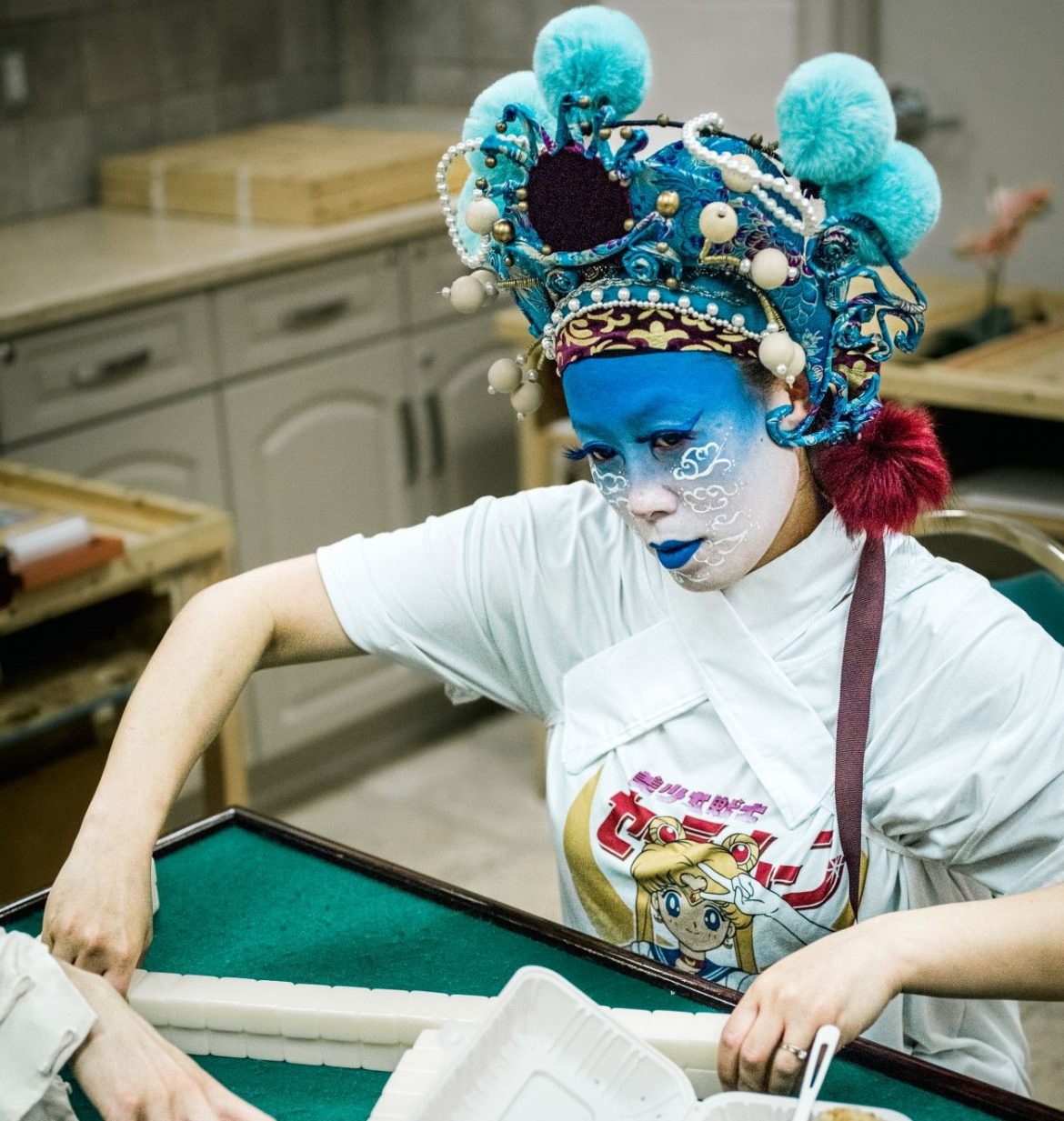
For the recent REVIVE Cantonese opera show in Calgary, local milliner Carrie Yap and professional makeup artist Liz Lai collaborated to tell the story through unique headpieces and makeup.

Tell a legendary story through unique headpieces and make up.
Yap was trained in the art of hat-making in New York and London, and set up the Yap Sister Studio in 2020. She chose The Legend of the White Snake as the studio’s first project, not only because it is well-known to the Cantonese opera community, but also because she grew up with the dialect. She saw the project as a bridge to reconnect herself with Chinese traditions, as well as a journey of self-reflection.

Carrie Yap saw the project as a bridge to reconnect herself with Chinese traditions.
It’s not easy to translate an idea in your head into substance. Traditional Cantonese opera headpieces are complicated because they have to be sturdy yet light, vibrant yet practical, bold yet glamorous. One must be more detail-oriented, meticulous and patient than usual to get all the details right.
It took Yap and Lai two years to complete the project. They began with extensive research, and then worked with mentors to ensure the headpieces and makeup matched the main characteristics of each character. In the end, six headpieces in three styles were made.
“Certain colours are reserved for certain characters,” Yap says. “The type of headpiece denotes rank, and the details could help evoke the emotions of the character. We worked to ensure the inclusion of key components defining Cantonese opera theatre, such as pom poms or the height of the headpieces. I would add small elements unique to my medium, such as beading, depending on the piece.”

Soldier’s Kui
Yap has been captivated by millinery artistry because of its stylish craftsmanship. Every aspect of the construction is done by hand and this is clearly demonstrated in the pieces she made for The Legend of the White Snake. Given that headpieces are critical to Cantonese opera, she says she found ways to combine traditional and contemporary craftsmanship.
“For the contemporary interpretation of the Green Snake, I adopted the Millinery Couture technique and incorporated traditional elements like the Chinese knots and pearl beads. It’s all hand-crafted and hand-sewn with no adhesives used.

Green Snake
“The headpiece for Guan Yu was made with traditional processes, using paper and metal wires as the base. To add vibrancy to this piece, I cut small pieces of fabric for detail, and used wire attachments and different types of traditional adhesives.”

Guan Yu
The headpiece for the White Snake was the star of the show, with Yap perceiving the character as “shy, curious and naive.”

White Snake
“I had to take that into consideration when making both headpieces for the White Snake. All of the details needed to reflect the character without overshadowing the elements typically defining Cantonese opera headpieces. The White Snake headpieces use beading and fabric flowers that are subtle, rather than bold like the Green Snake character.”

White Snake
When Yap and Lai embarked on the project, the pandemic was raging. It took her considerable time and effort to refine the details of this unique craft, but she thinks all the exploring and hard work was well worth it.
“For us, some of the benefits included reviving and showcasing a craft that is on the decline and helping to ensure this art form carries on,” Yap says.
“By using our skills, we were able to share our story with other Canadian-born Asians, while also highlighting a form of Chinese theatre.
“By making headpieces for The Legend of the White Snake, it has helped me rediscover my Asian roots. Through my practice, I blend couture techniques with cultural touchstones, such as silk embroidery and Chinese knots.”
Her next project is based on Chinese children’s myths, tales and legends. Once again, she will give folklore a new spin through hats.
