Story | Connie Li Photography | Tony Aw, Courtesy of Maggie Han
The Hua Cai Awards has now become a national celebration of excellence across cultures, celebrating and recognising individuals who have not only achieved excellence in their respective fields but have also dedicated their careers to breaking barriers, fostering cross-community understanding, and strengthening the fabric of Canada’s diverse society.
Click HERE to watch the interview video by Sing Tao Media Group
Stepping onto the stage with quiet confidence, this year Maggie Han accepted her well-deserved award from Dr. Joseph Wong, founder of the Yee Hong Community Wellness Foundation—under the warm lights of the 2026 Hua Cai Awards ceremony.

This year Maggie Han accepted her well-deserved award from Dr. Joseph Wong, founder of the Yee Hong Community Wellness Foundation(The third person from the right).
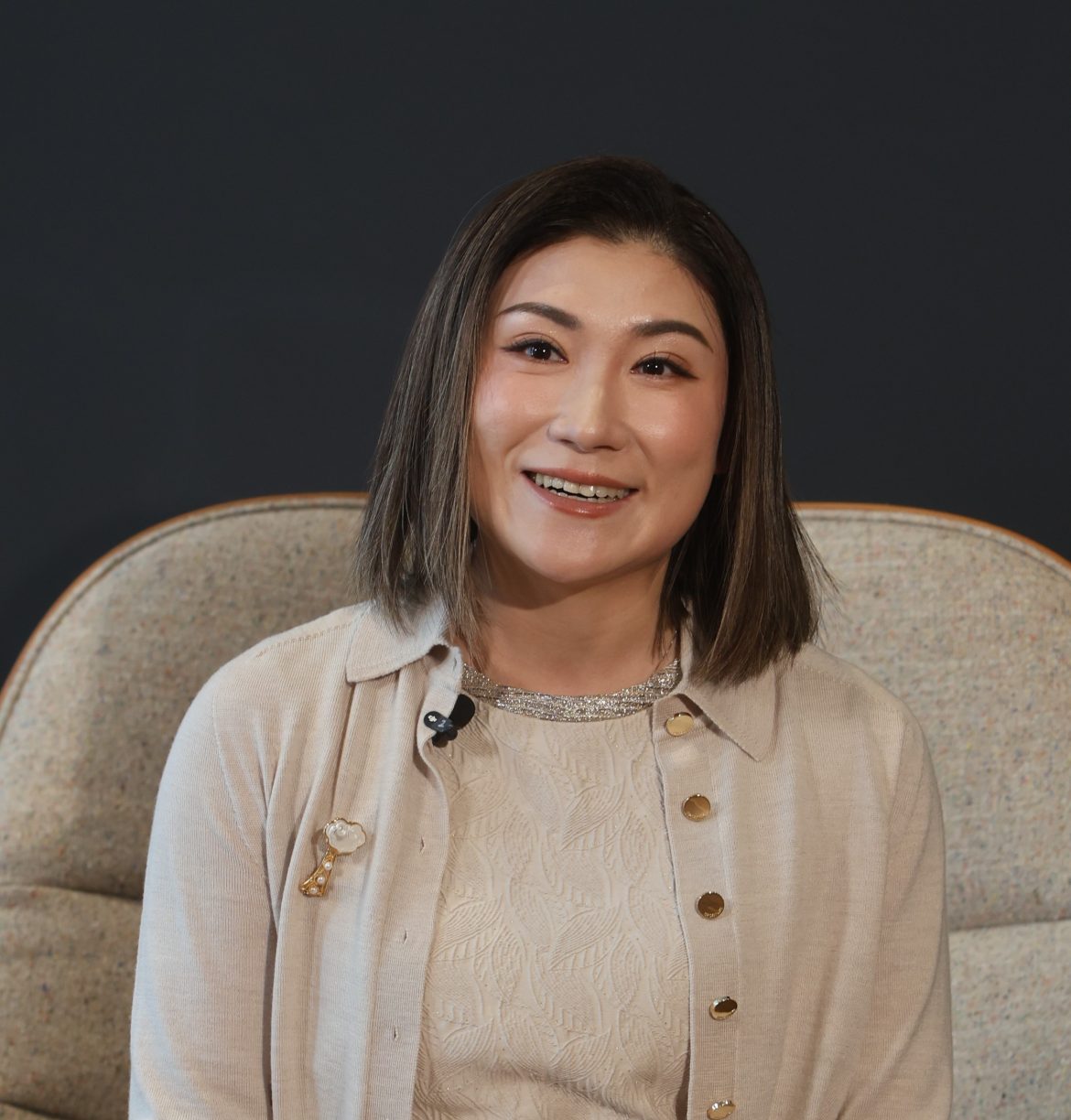
In that moment, the recognition was less a personal accolade than an acknowledgment of years spent working steadily behind the scenes. Maggie Han, the Executive Director of the Canadian Health Associations influence has also long extended beyond any single title.

Han was with Dr. Vivienne Poy, the first Asian Canadian appointed to the Senate(the middle person) at the ceremony.
Han reflected on the significance of the moment: “Receiving this award from Dr. Wong feels less like a personal honour and more like a passing of responsibility. It reaffirmed for me that the path I have chosen in public service is both clear and deeply meaningful.”
Han’s path was never conventional. As an international student majoring in forestry economics, she entered a field with few
women—and even fewer with a Chinese background. Early on, she began asking how her professional training, combined with her linguistic and cultural perspective could be translated into meaningful, practical impact within Canadian society. Guided by her personal philosophy “Just do it”—she chose action over hesitation.

Volunteered with a stray dog welfare organization while she was in school.
After a rigorous selection process, Han joined the Toronto and Region Conservation Authority, later becoming the only Mandarin-speaking member of its board. During her term, she initiated the organization’s first-ever Chinese-language annual report—an understated but lasting step toward greater accessibility and inclusion.
Over time, volunteer work became the core of her identity. That commitment took clearer form with the founding of the Life
Education and Growth Association of Canada. As a lecturer at the University of Toronto, Han saw firsthand that academic performance, leadership and emotional strength are critical to long-term growth. Through the association, she supported young people at keymoments in their development.

A lecturer at the University of Toronto.

A lecturer at the University of Toronto.
Her focus on youth well-being naturally extended into healthcare with Han becoming actively involved in charitable and fundraising initiatives for Toronto’s Hospital for Sick Children, helping patients and families navigate some of life’s most difficult circumstances. Her motivation was deeply personal, “my mother is an oncologist,” she elaborated. “I’ve seen how illness can reshape an entire family—emotionally and psychologically. I wanted to contribute where I could.”
Looking ahead, Han holds a longer-term vision: helping to cultivate a new generation of medical professionals with Chinese
backgrounds and strong bilingual skills. Such professionals, she believes, can play an important role in bridging communication gaps between patients, families and healthcare institutions. To support this goal, she has organized educational programs and study initiatives that introduce participants to medical fields while emphasizing the value of Chinese culture.


Among her many roles, Han’s work with the Centre for New Immigrant Well-Being stands out as one of the most comprehensive expressions of her commitment to community service. During the COVID-19 pandemic, the organization became a vital platform for public education and support. Providing scientific lectures, expert hotlines, mental health outreach, surveys, and research initiatives, whilst sharing the Chinese community’s contributions to the
pandemic response.
For many new immigrants and elderly members of the Chinese community, language remains a significant barrier to accessing healthcare. In response, the association also introduced medical English language courses. These are practical, targeted programs designed to address real-world challenges and help participants navigate the healthcare system with greater confidence.


Outside her professional and volunteer work, Han is an avid reader, traveler, and photographer. Books, landscapes, and images offer moments of reflection and the energy to continue giving back. “We walk on paths built by those before us,” she reflects, “but we also carry a responsibility to create more possibilities for the future.”
It is this belief that has guided her journey—from working within niche spaces to serving the broader public. Han does not see the Hua Cai Award as a conclusion, but as encouragement to continue moving forward along a path shaped by purpose, persistence, and service.