
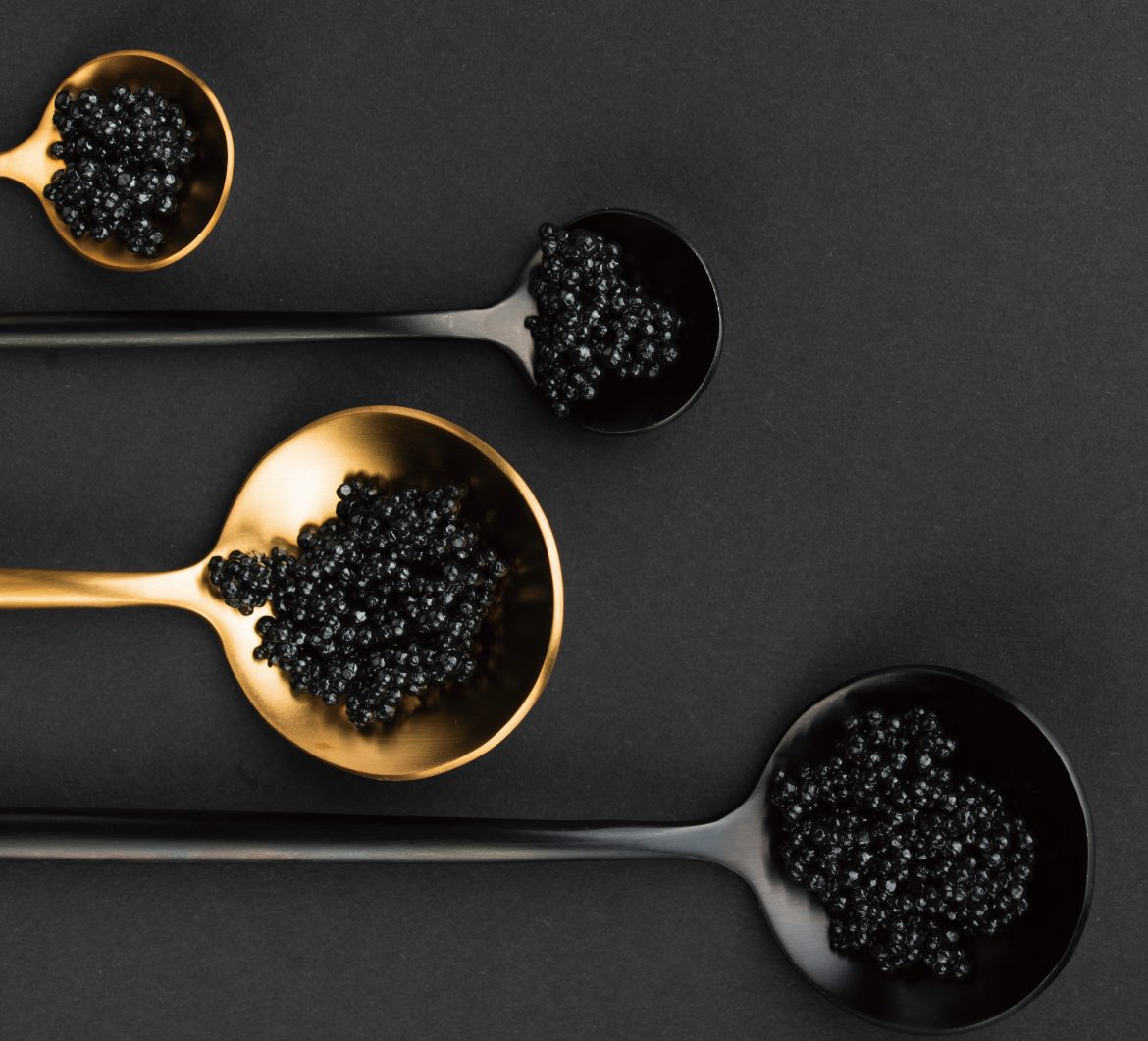
When it comes to the finer things in life, few foods can compete with caviar. Wherever caviar appears, luxury is implied. Served with accoutrements, christening hors d’oeuvres or gilding the main course, there are as many ways to enjoy the delicacy as there are varieties and grades.

The dim-sum course from Bo Innovation’s The Hong Kong Story blue menu features a delicate caviarcappedcrispy wu gok (crispy taro puff) that hides a smoked quail egg.
It might feel overwhelming when sourcing a tin of caviar at specialty and fine grocers, given the wide range in quality and price points available. There’s prized Beluga, highly desired osetra and many non-sturgeon roes, like salmon, lumpfish and flying fish. But what exactly is caviar, and how do you know you’re getting the real deal?
To help with this, we’ve put together an informative guide that features premium products sourced from Toronto’s Caviar Centre. As Canada’s main caviar distributor, they also supply restaurants, including Langdon Hall, Shoushin, Chabrol and One, plus gourmet grocers like McEwan Grocery, Summerhill Market and Mike’s Fish Market at St. Lawrence Market. For direct-to home orders, visit caviarcentre.com.
What is caviar?
A delicacy that’s sought-after worldwide, caviar isn’t just any fish egg. Specifically, it’s the salt-cured roe from specific species of sturgeon. Exquisite in flavour and texture, subtle variances exist between caviar varieties that range in size, texture and flavour, depending upon the fish it was harvested from, the method of preservation and storage.
Traditionally, caviar came from wild Caspian Sea and Black Sea sturgeon, with Russia and Iran being the best-known sources of caviar. However, due to the depletion of wild sturgeon stocks, most caviar today is sustainably raised and harvested from aquaculture farms around the world.

Founded in 2011, Domaine Huso in Neuvic is the newest of seven major producers of farmed caviar in France.
Caviar comes in different grades based on such factors as roe uniformity, size, colour, glossiness, fragrance and firmness. Caviar’s taste and texture, in addition to its cost, is also reflected in the grade. (Caviar Centre notes that fresh caviar is 2-5% salt in contrast to cheaper quality caviars that tend to have over 7% salt content.)
In general, russian beluga caviar is the most prized and priciest. Of the popular raised caviars like osetra and sevruga, Imperial (or Tsar Imperial) is the highest grade and possesses the biggest and lightest beads. It’s followed by royal, with smaller beige to light grey eggs, then Classic or Select, with darker grey-black beads.
Traditionalists tend only to consume bona fide caviar, but modern connoisseurs are open to trying more affordable non-sturgeon roes, like paddlefish, lumpfish or trout.
Why is caviar so expensive?
Not only considered the food of royalty, as well as a status symbol, the premium price commanded for this cherished commodity is due to its high demand and low availability—at one point it was overfished almost to extinction.

In general, besides rarity, caviar that comes from older fish is larger, lighter and glossier, but also more expensive. Sturgeons are an ancient fish that have to mature over 20 years before producing eggs.
In the past, the only way to extract eggs was by killing the sturgeon – a process that would also eliminate future generations of caviar-producing fish. These days, many sturgeon farmers milk the fish instead, leaving them alive to reproduce.
Caviar’s nutrition
Typically enjoyed in small amounts, caviar is a good source of calcium and phosphorus, as well as protein, selenium, iron, magnesium and vitamins A, B2, B6, B12, B44, C and D. The high-protein food is also an excellent source of amino acids (lysine, isoleucine and methionine).

Each tablespoon of caviar contains a gram of Omega-3 fatty acids, but is also high in sodium and cholesterol. It is not recommended for pregnant women, since the product isn’t pasteurized.
VARIETIES OF CAVIAR
Sturgeon Caviars:
As the most luxurious caviar commercially available, belugas can live up to 100 years and are the largest and scarcest of sturgeons. Once reserved for royal families, the variety that’s exclusive to Caviar Centre is sourced from the only farm in the world that raises its fish in Caspian Sea saltwater and is available in tins ranging from 10 to 250 grams.

A sampling of sturgeon caviars from Caviar Centre, from bottom to top: Beluga (Huso Huso), Imperial Osetra, Osetra and Venetian Sturgeon.
Considered the highest premium grade available, beluga caviar’s large pale grey eggs are clear, glossy and have a prominent eye (dark spot). Their flavour is smooth, delicate and balanced, briny like kelp but slightly sweet. The caviar
has a mild oily-creamy—almost buttery—body and melts in the mouth with a pleasing lingering finish.
Osetra Variesties
Next to beluga, osetra is most prized. The medium-sized sturgeon can live up to 50 years with roe that ranges from gold to almost black (the lighter varieties are coveted for their richer flavour and generally come from older sturgeons). It’s a connoisseur choice that’s popular for its taste and quality and comes in 30- to 250-gram tins.
caviar in France.The Imperial or “golden” osetra caviar is a rare variety produced from very mature osetra sturgeons that was once reserved exclusively for Russian czars. The medium-sized roe is glossy and deep brown with pale amber undertones. Its
semi-firm texture gives way to nutty flavours that have a sharp almost soya saucetasting start, which mellows out with a creamy-oily lasting saline finish.

Medium-sized osetra is dark brown with faint golden tones. These soft orbs dissolve on the tongue, with a flavour that’s mildly malty, bordering on nutty, with hints of soya sauce that lingers in its sticky, creamy finish.
Farm-raised in Venice, the Italian Siberian sturgeon lives up to 60 years and matures late. Its glistening roe is medium -sized and very dark, bordering on black, with yellow undertones. The soft texture gives away to a clean salinity that’s like mineral-enriched salt (think, Himalayan salt) and has a slightly oily-rich sticky finish. The taste is shorter lasting, lingering faintly with a slightly astringent, clingy finish. As one of the best-valued ostera caviars on the market, it checks all the boxes in taste and texture for almost half the price of osetra.
Non-sturgeon Caviars
Brilliant orange, these glistening beads have a crisp, al dente texture that yields to a firm bite. The flavour is salty clean, but leaves a hint of smoky bonito on the palate. raised on aquafarms in Europe, these leading freshwater cultured species produce heartier roe that’s great when consumed with creamy ingredients and comes in 50- to 100-gram jars.

Of the non-sturgeon roes, highly desirable varieties include salmon and trout.
Prized for having voluptuous, fiery orange-red pearls, these juicy roe bust to release a bright and briny creamy-viscous liquor that’s intensely of salmon, clean sea water and crisp cucumber. A wild product from the cold waters of the pacific northwest and Alaska, it can be used raw as a garnish or cooked into many dishes. Full of Omega 3s, these come in 113- to 1000-gram jars.
