Story | William Ha Photography | Lexus Canada
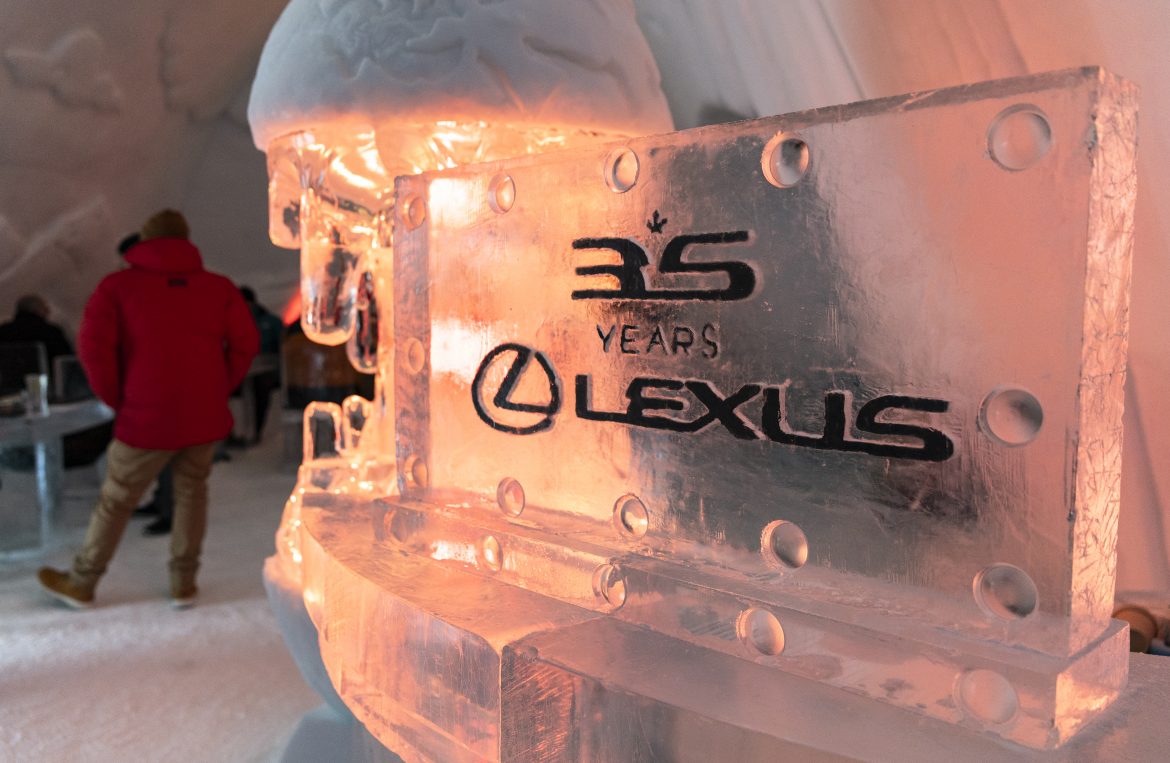
This year, Lexus celebrates its 35th anniversary.
Every Lexus model today is still a love letter to smoothness, quality and rational luxury, just like the original launch vehicles in 1990 were.


These attributes don’t raise pulses the way sharp handling and class-leading acceleration numbers do, but they are important to the many buyers who want a smooth, well-designed, high-quality luxury vehicle they can depend on to last.
A Quick Look at History
As Toyota’s luxury division, it was a bold decision back in 1983 to green light development of the Lexus brand. The mission was to redefine luxury through engineering while offering industry-best customer service through a separate dealer network.

Launched in 1990, the original LS 400 stunned the industry with its refinement, high build quality, and durability — attributes that still define Lexus today.
Two models (the ES 250 and LS 400) were launched for the 1990 model year, followed by the SC 400 grand touring coupe in 1991. The full-size LS 400 sedan was an engineering marvel that upended the flagship sedan segment by setting new standards for quality, performance, fuel efficiency and smoothness.

A Lexus SC clay model, the brand’s first grand touring coupe launched in 1991.
One specific engineering goal then was to ensure an LS 400 with 80,000 km on the odometer would not look, feel, sound or perform any differently from a brand-new unit. Indeed, the LS 400 proved so good over time that it forced competitors back to the drawing table.

Over the decades, European luxury brands adapted and at times surpassed Lexus by upping the ante in technology, styling, performance and bespoke options. Competitors targeted luxury vehicle buyers who cared less about reliability and desired higher-tech features, user-friendly infotainment systems, more power and exclusivity.
The European automakers also have more brand heritage and nameplate prestige, so they still sell more $100,000+ vehicles than Lexus, but it was Lexus who forced them all to elevate their games.
The Ace in the Hole: Quality Control
Earlier this summer, we toured their award-winning assembly plant in Cambridge, Ontario as part of a 35-year celebration event. Lexus Canada also provided us a small fleet of vintage Lexus vehicles to drive, which included the original LS 400 and SC 400 so we could experience the seminal models that disrupted the automotive luxury space so seismically. Every one of the well-maintained vintage vehicles were still smooth and sturdy.

From the plant tour, we learned that Lexus is particular about setting plant workers up for success and helping them adopt a quality-focused mindset with the buyer in mind.


 Among their many approaches is a system of targeted training stations (colloquially called dojos) within the production plants. These stations include forklift driving simulators and purpose-built practice tools to help workers hone critical skillsets (e.g., how to properly apply body adhesives, tightening fasteners in the proper order and many more). Workers must pass evaluation tests before working on the production line.


Other approaches include the use of augmented reality tools to assess training effectiveness and ensure quality. For example, a tablet can scan a portion of the vehicle and instantly determine if welds were executed accurately in the right places. Workers are also encouraged to speak up and offer insights on how to continuously improve processes.
Looking Ahead
In the first half of this year, Lexus led new luxury vehicle sales in Canada thanks to a diverse electrified portfolio and capturing buyers in high-volume segments. They know their customer base well, so we don’t expect them to mess with a good thing even though we want the brand to build more powerful F-Sport models (not just cosmetic upgrades), and offer a manual transmission option for at least one sedan or coupe line. Bespoke build programs for more high-end models would also be welcomed.

In the coming years, expect even more electrified vehicle options, a new suite of industry-leading safety systems (Lexus Safety System+ 4.0), a new infotainment interface, and a new halo sports car producing more power and fanfare.
If you like to keep your vehicles a long time and prioritize quality and smoothness, there is a Lexus vehicle for you in almost every segment.
A Quick Look at Lexus Through the Decades
1990s
Launched brand, grew product portfolio, solidified quality reputation and introduced market’s first luxury crossover (RX 300). Peak Lexus was during the late 1990s.

A Canadian-market 1990 LS 400

1998 Lexus RX 300
2000s
More technologies introduced, including multiple segment-first luxury hybrid models, world’s first 8-speed transmission in a passenger car (LS 460) and a high-performance V8 (IS F).

2002 Lexus IS 300

2009 Lexus IS F
2010s
Weathered a recall crisis, built the iconic LFA supercar, introduced brand-defining spindle grille while growing SUV portfolio and building the stunning LC 500 coupe.

Lexus LFA (only 500 units produced worldwide)

2015 Lexus NX 300
2020s
Further electrification of vehicle line-up, improved infotainment systems, enhancement of SUV portfolio.

2024 Lexus LC 500 touchscreen

2025 Lexus RX 450h+ plugged in

2025 Lexus GX 550 Overtrail+